
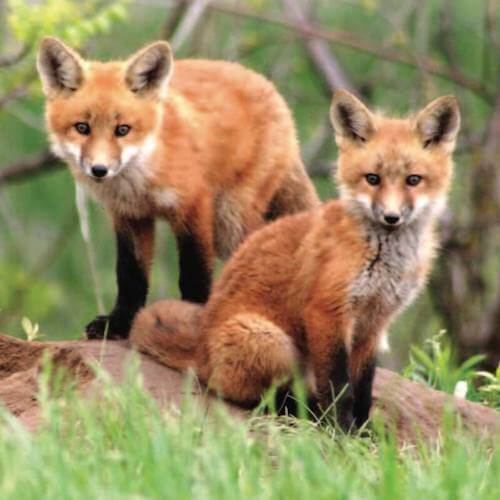
I won’t ever forget my first coyote encounter: It was dusk, and I was riding my bike into a stiff breeze and saw him about to cross the road, perhaps 50’ in front of me. I knew my time with him would be brief, so I softly braked and rolled into a fetal position on the other side of the road. Instead of bolting, he paused about 20’ from me – I could not believe it! I lay in the dirt emitting pup-like noises to hold his attention while I soaked in every feature: He was bigger than I expected, his eyes were yellow, his feet somewhat delicate, and his ears – pointed down at me - seemed huge. Maybe 10 seconds passed, but that encounter will last a lifetime, with many encounters following, all of which inspired my advocacy for the coyote. Afterward, he nonchalantly hopped over a log and vanished into the woods. I rolled over, howling with laughter.
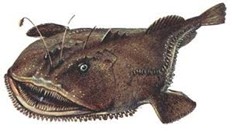
Several years ago, while conducting underwater studies for the Seabrook Station in NH, we were involved in night dives quantifying the abundance of nocturnal critters. My dive partner and I noticed green iridescent eyes reflecting in our flashlight. Getting close we saw they belonged to a 40-50 pound goosefish (also called a monkfish) who was lying on the bottom angling for an unsuspecting meal. It was mesmerized by the light so did not move.
I always wondered how that fleshy appendage above their mouth worked so I reached out and touched it. The next thing I knew my arm was in its mouth up to my elbow. Not sure who was more surprised. Fortunately, although its teeth are sharp, they are not long and I was wearing a 3/8” thick wetsuit so only got a few scratches.
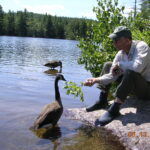 In the summer of 1968, I was a member of a 4-person 1,200-mile kayak expedition down the Churchill River in northern Canada. Our goal: as a 3rd year wildlife major, was to have a wilderness experience, see wildlife, and to retrace the footsteps of the early Voyageurs.
At the 1,000+ mile mark an accident swept us down a two-mile section of class 5 rapids. At the bottom, there were 3 boats, 2 people, and one paddle. Already, exhausted and malnourished, we lost most of our food and Glen. We had 150 miles to go. As I was searching for Glen I spotted two molting Canada geese. They would provide essential nourishment over the next 3 days, as we tried to figure out how to finish our trip.
I have forever had a very soft, reverent place in my heart for Canada geese that continues to this day.
In 1966, fresh out of high school, my first boss, forester John C. Calhoun, told me if I really wanted to help wildlife, I should do one of three things: be a lawyer, a politician, or a forester. Thankfully, I chose the latter and have had a storied 47-year professional forestry career.
To learn more about the kayak story, go to UNH Alumni magazine website link for the 40th anniversary commemorative article: Be Still My Heart
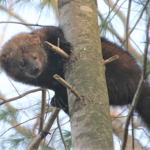 In the summer of 1972 I was a graduate student summer fellow at the Smithsonian in D.C. (I was using its electron microprobe analyzer to study the shell chemistry of marine ostracods.) It was a hot summer, and for a brief getaway I decided to visit my aunt and uncle who had family summer place (an old cape) in Bristol, with a grand view of Newfound Lake.
One morning as I stopped to rest while walking around the edge of their meadow (renown for blueberry picking), I heard a rustling above my head. See attached for what I saw looking down at me. “What the heck is that? I wondered (being a native and naïve Delawarean).
I looked it up in my Peterson Field guide and thought “how cool is this to have this predator still on the landscape.” That’s where I began thinking New Hampshire might be a great place to live and work after grad school. I could go on about how that came to be, but that’s not necessary. Point is, the Fisher had more pull with me than the chamber of commerce.
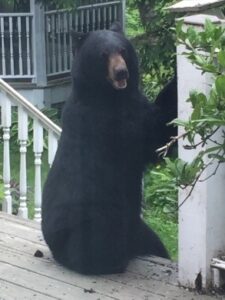 One day, I came face to face with a black bear mama as I started out the door. We looked at each other and froze -- equally startled and equally fascinated. I spoke softly to her, perhaps to myself as well… She turned and walked down the steps and away. She would be back each year, bringing her cubs and cleaning the old honey off last season’s bee hives.
I’ve had the privilege to visit places like Africa, Australia and the Galapagos Islands where giant tortoises have been granted person-hood rights by the government of Ecuador. I share this planet, and my backyard in New Hampshire, with all sorts of amazing creatures who were here long before me.
 I don’t own this land of theirs, I steward it and hope that when I’m gone, they will still be here, and the next residents will understand how to respect these sentient beings and figure out how to co-exist.
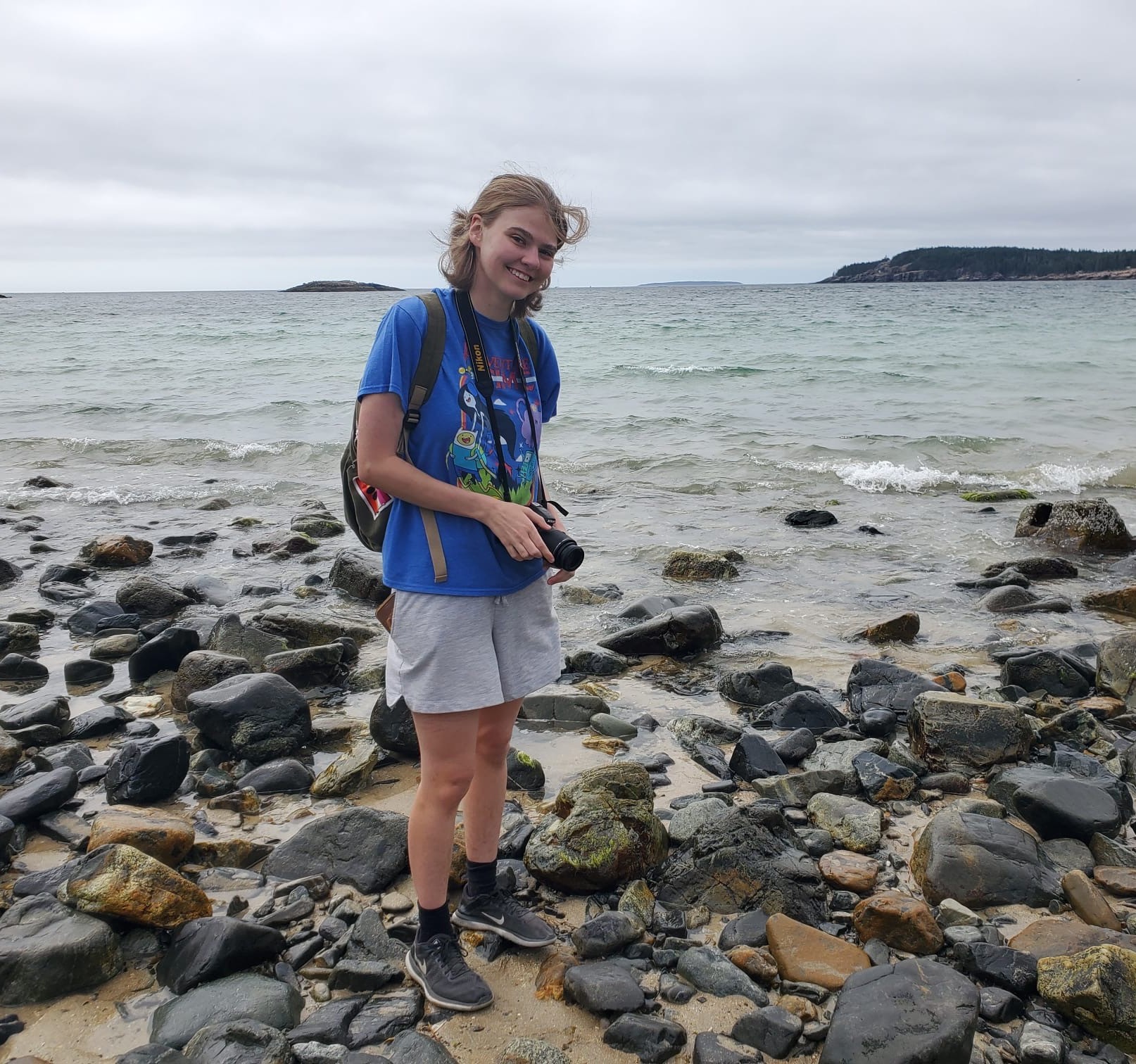
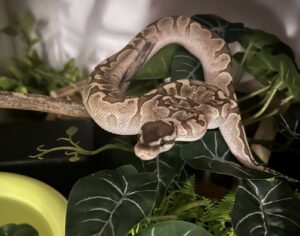 One day, I came home to discover one of my captive baby ball pythons perched way up high on a water bottle on the microwave. He was in striking position, ready to bite. Because there was no other explanation, we concluded he must have pushed his enclosure door open, slithered down from his shelf, and made the journey from room to room, then up the kitchen counter to his perch. This makes sense. In the wild, male ball pythons, especially juveniles, often eat birds- and they’ll wait way up high in a tree branch to snatch one! In our apartment there was no trees or birds, but there was a kitchen counter, and a water bottle! Snakes are smart, surprising little animals.
I’m a critter keeper. I keep snakes, bugs, and lizards, the unsung (yet speciose and abundant) little outcasts of the animal kingdom, in enclosures resembling or near resembling their wild habitats. I also work on private little rewilding projects with native plants, and I’m a hobby photographer, artist, writer, and extremely avid reader. I manage communications and the digital strategy for the NH Wildlife Coalition.
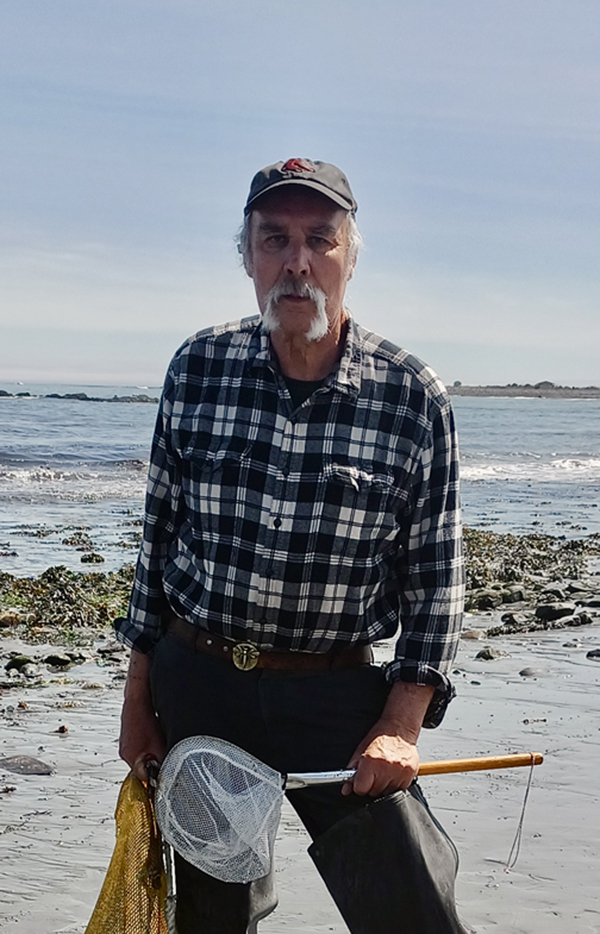
Mark retired after 40 years as an environmental consultant. His professional career involved development of monitoring and compliance strategies for Federal Clean Water Act regulations in over 39 major aquatic systems throughout eastern USA, including estuarine and river systems, and in the Great Lakes. Much of his focus has been on developing statistical sampling designs to assess impacts from losses of fish and invertebrates due to operations of electric generating facilities. He holds lifetime hunting, fishing and clamming licenses in NH and serves on the Restoration Advisory Board for the cleanup of PFAS contamination at Pease Airforce Base in Newington, NH.
Interests include fishing, kayaking and hiking with his three rescue dogs.
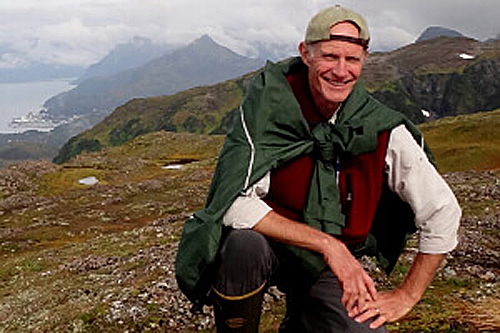
Rick is a Principal in Ecosystem Management Consultants. He is a certified wetland scientist and founding member of the NH Association of Natural Resource Scientists. He was on the faculty of Antioch College from 1985-2001 and has been an adjunct professor at the University of New Hampshire since 2006. He is on the Scientific Advisory Committee for the NH Wildlife Action Plan.
Interests include virtually everything in the natural world, and sometimes, people.
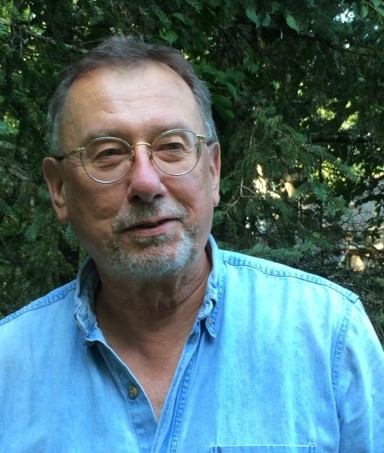
John has worked for county, state, and federal natural resource agencies in New Jersey, Florida, and Oklahoma. He then returned to New Hampshire as a professor at UNH. For 31 years, he advised graduate students working on a variety of field projects that included black bears, moose, flying squirrels, painted turtles, bobcats, and New England cottontails. Since retiring from UNH, John regularly contributes articles to Northern Woodlands magazine and NH Fish and Game’s Wildlife Journal.
His interests include cycling, fishing, canoeing, and an occasional game of pickleball.